
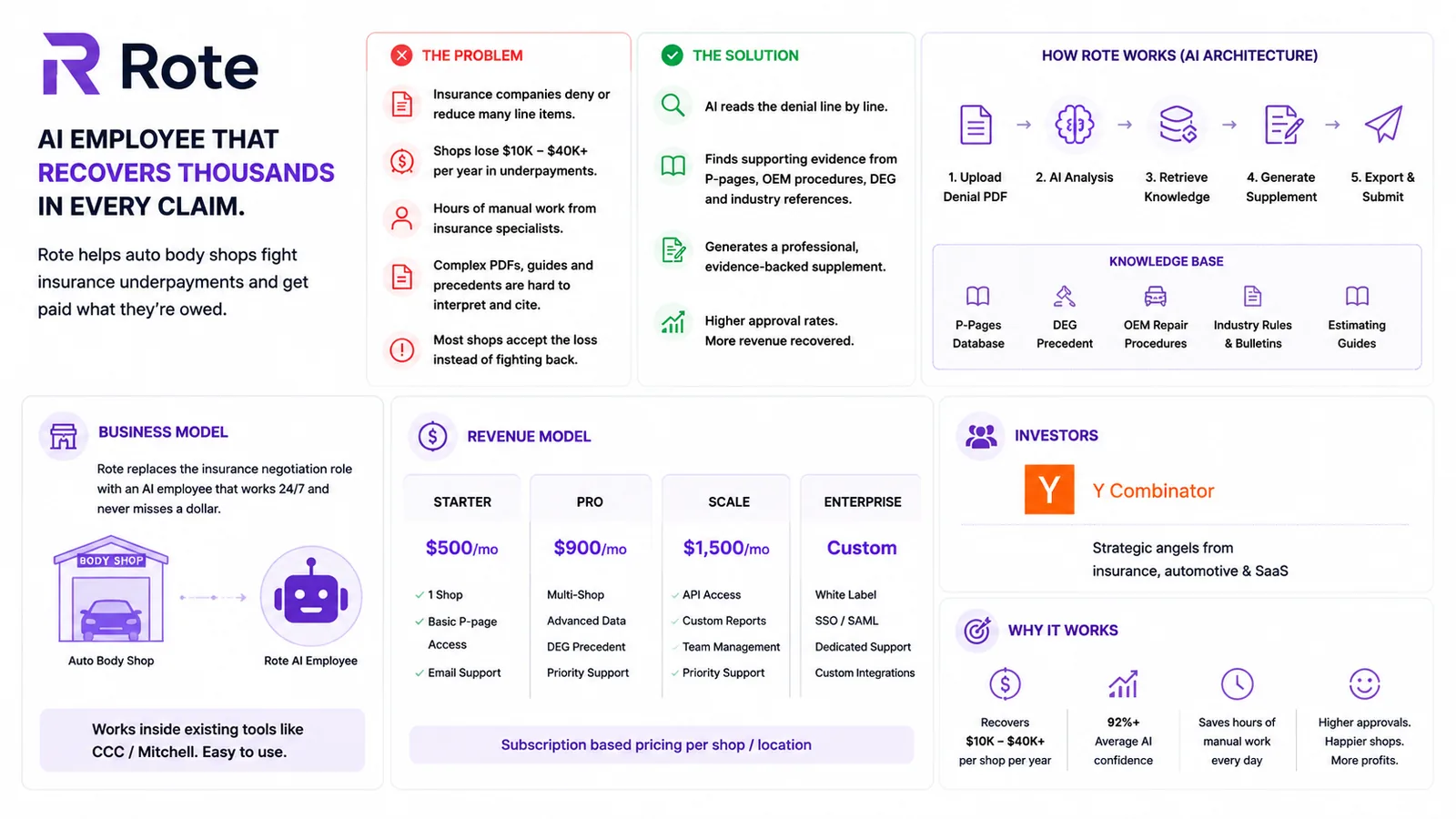
This is an alternate view of the Rote case study, framing the product as an AI employee that helps auto-body shops fight insurance underpayments and get paid what they're owed. It highlights the business and revenue model.
In simple terms
Rote as an 'AI employee' — the same vertical product, focused on how it works and how it's sold.
How it works
- 1The problem: shops lose thousands per year in underpayments that are hard to fight manually.
- 2How Rote works: read the denial, find supporting evidence, generate an evidence-backed supplement, export and submit.
- 3It works inside existing tools (like CCC/Mitchell), so it's easy to adopt.
- 4A knowledge base (P-pages, DEG precedent, OEM procedures, estimating guides) grounds every claim.
- 5Business model: replaces the insurance-negotiation role with an AI employee, priced per shop.
Key points
- Framed as an 'AI employee' that works 24/7 and never misses a dollar.
- Integrates with existing shop tools for easy adoption.
- Tiered subscription pricing (Starter, Pro, Scale, Enterprise).
- Turns manual, error-prone work into recovered revenue.
Why it matters
Positioning an AI product as an 'employee' that plugs into existing workflows is a powerful go-to-market lesson — it lowers adoption friction and ties price to clear value.
Frequently asked questions
- How is this different from the other Rote card?
- Same product, this view emphasises how it works and its business/revenue model rather than the technical architecture.
- Why does 'AI employee' framing work?
- It maps to a job the customer already pays for and integrates into tools they already use.