
J-Space vs Chain of Thought
Two layers of thinking: hidden vs visible.
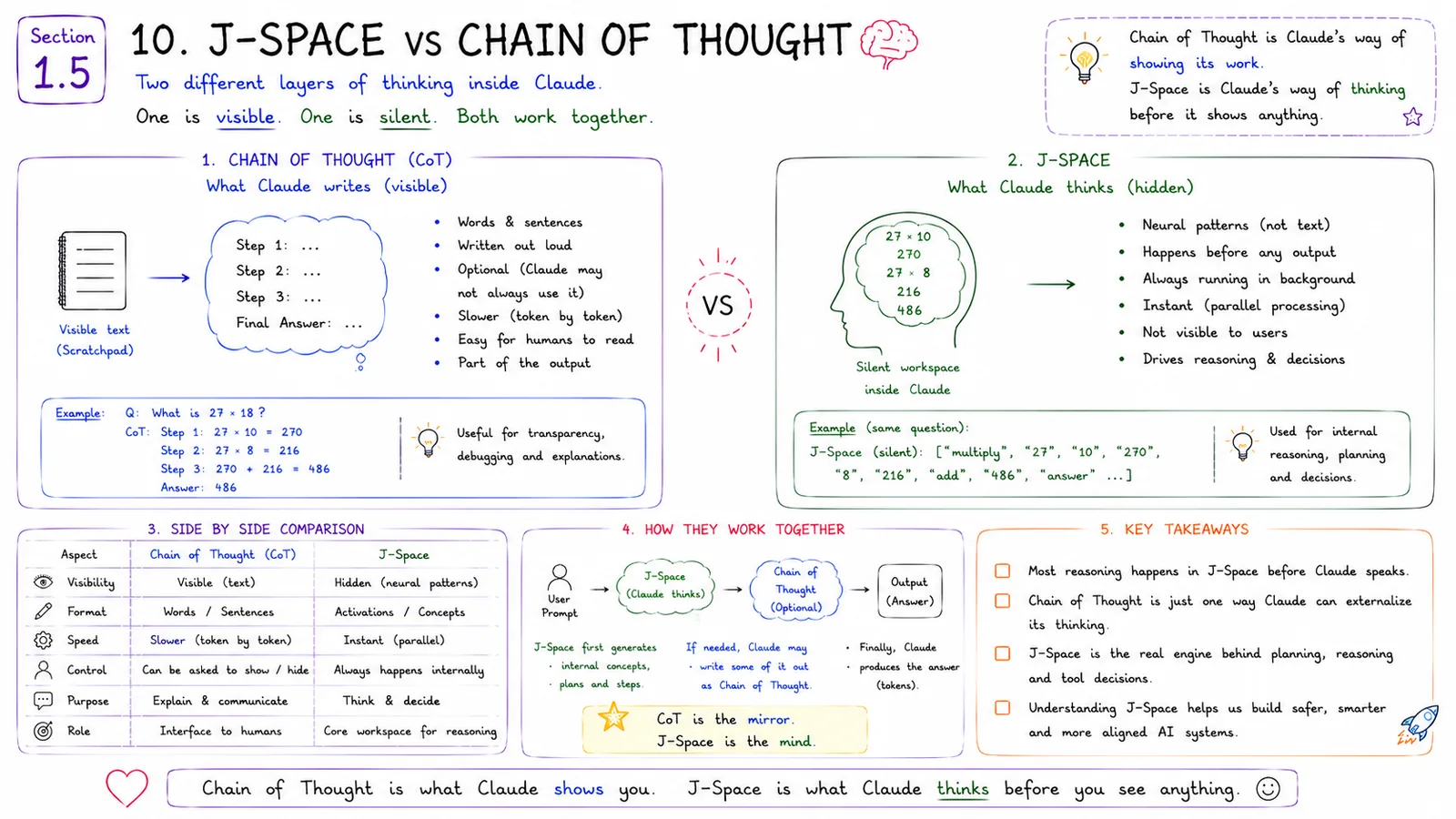
This compares two layers of thinking: the visible chain of thought a model writes, and the hidden internal workspace where it thinks before showing anything. Both work together.
In simple terms
Chain of thought is what the model writes; the internal workspace is what it thinks first.
How it works
- 1Chain of thought (visible): words and sentences written out, optional, slower, part of the output.
- 2Internal workspace (hidden): neural patterns, happens before output, runs in the background.
- 3The internal workspace thinks first — concepts and plans.
- 4If needed, the model writes some of it out as chain of thought.
- 5Finally it produces the answer.
Key points
- Chain of thought is human-readable and useful for transparency and debugging.
- The internal workspace is instant, parallel and drives reasoning.
- Most reasoning happens internally before any chain of thought appears.
- Chain of thought is the mirror; the internal workspace is the mind.
Why it matters
Distinguishing written reasoning from hidden reasoning explains why chain of thought helps transparency but isn't the whole story of how a model reasons.
Frequently asked questions
- Is chain of thought the real reasoning?
- It's one externalised view; much of the reasoning happens internally before anything is written.
- Do they work together?
- Yes — the internal workspace thinks first, and chain of thought writes some of it out for transparency.
More in Claude Interpretability (J-Space)
Inside Claude's Brain
What happens before Claude speaks — the J-Space workspace.
What Is J-Space?
A silent internal workspace inside Claude's neural network.
Global Workspace Theory (GWT)
The theory that inspired J-Space.
How Claude Thinks Silently
Claude thinks first, reasons, then speaks.
How Anthropic Reads Claude's Thoughts
The J-Lens (Jacobian Lens) tool explained.
Reading Claude's Thoughts — The Pipeline
Neural activity → J-Lens → words/concepts.