
Top 20 Cheat Sheets
Top 20 Python Libraries for AI Engineers
Essential libraries and the problems they solve.
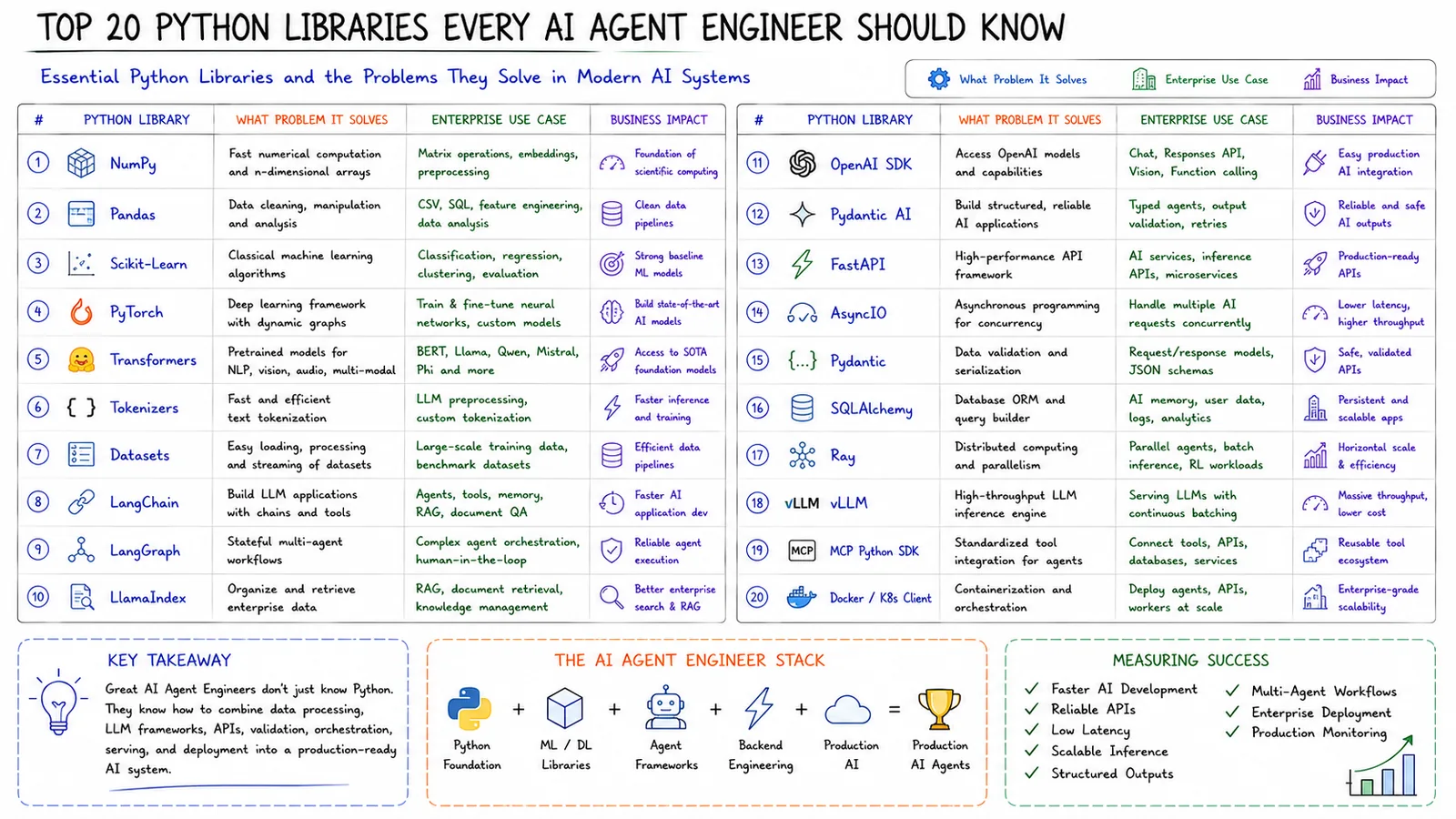
This cheat sheet lists the top 20 Python libraries every AI agent engineer should know — the essential libraries and the problems they solve in modern AI systems.
In simple terms
The 20 Python libraries that make up the AI agent engineer's toolkit.
How it works
- 1Foundation: NumPy, Pandas, Scikit-Learn for computation, data and classic ML.
- 2Deep learning & models: PyTorch, Transformers, Tokenizers, Datasets.
- 3Agent frameworks: LangChain, LangGraph, LlamaIndex for chains, workflows and RAG.
- 4Backend & serving: FastAPI, Pydantic, SQLAlchemy, AsyncIO, Ray, vLLM.
- 5Production AI: OpenAI SDK, Pydantic AI, MCP Python client, Docker/K8s client.
Key points
- Great agent engineers combine Python with ML/DL, agent frameworks, APIs and deployment.
- The stack: Python foundation + ML/DL + agent frameworks + backend + production.
- Pydantic and FastAPI power reliable, structured AI services.
- vLLM and Ray handle high-throughput inference and distributed workloads.
Why it matters
Knowing the right libraries — and what each solves — lets you assemble production AI systems quickly instead of reinventing infrastructure.
Frequently asked questions
- What's the core agent stack?
- Python foundation (NumPy/Pandas), ML/DL (PyTorch/Transformers), agent frameworks (LangChain/LangGraph) and backend (FastAPI/Pydantic).
- Which library for structured output?
- Pydantic — it validates and parses LLM output against a schema.